IN FLUX: Immersive Perspectives in Urban Landscapes
This body of work grew out of my graduate thesis, built around the idea of the flâneur, someone shaped by the city indirectly, unintentionally, in passing. I added the lens of a visual communicator, a designer who draws from the urban environment and reframes it, treating the city as my studio.
MFA Thesis, RISD
Approach
The process was exploratory, testing an idea through a walk, a photograph, a traced line, a modeled form, and following my eye rather than a fixed plan. Some pieces led nowhere. Others clicked. Each piece that made it into this section pulls apart the city’s static and ephemeral qualities, its measured and undefined ones, and reassembles them from a different vantage point, fragments of time and partial views that add up to something like a city’s own language, its own syntax and grammar.
01 / Unassembled City
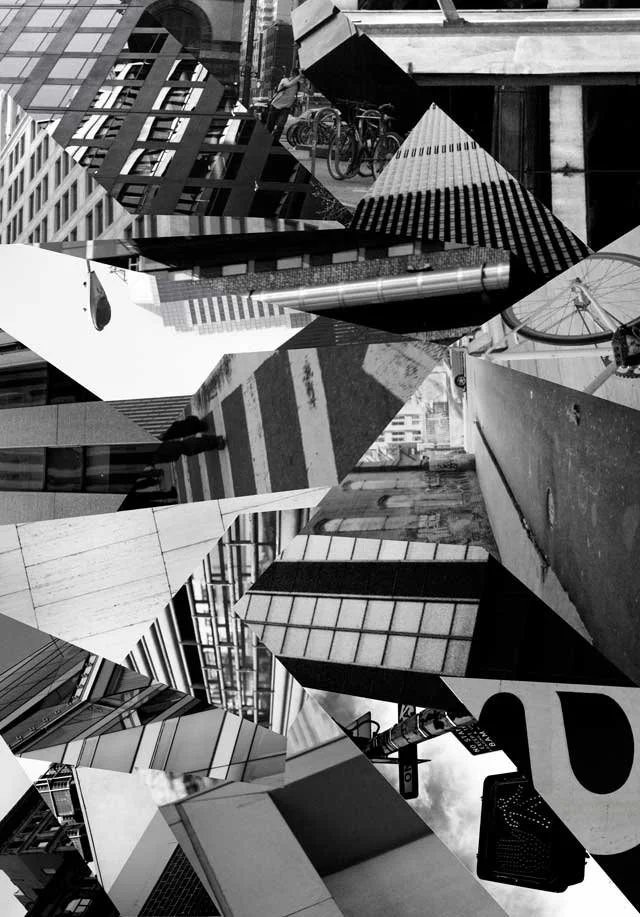
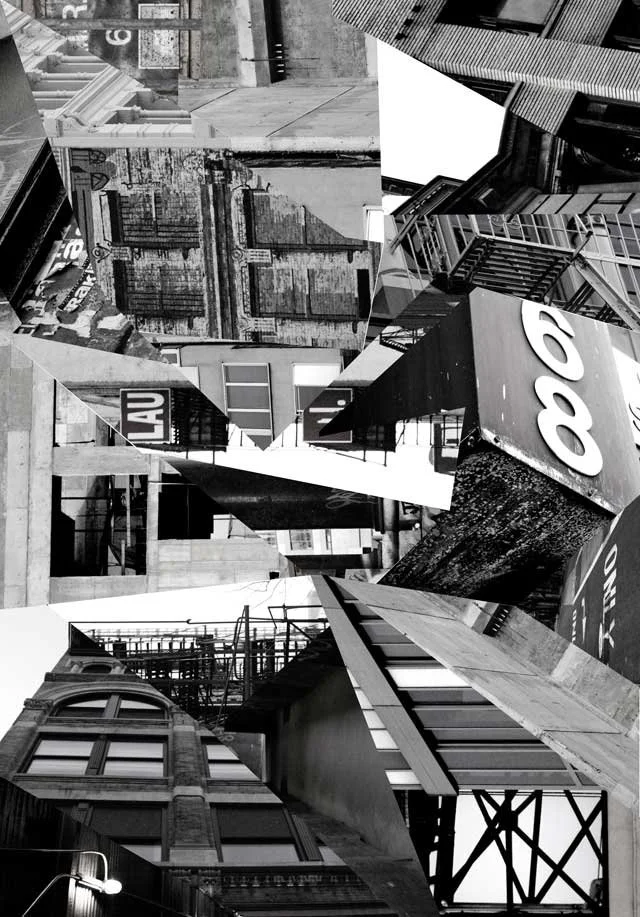
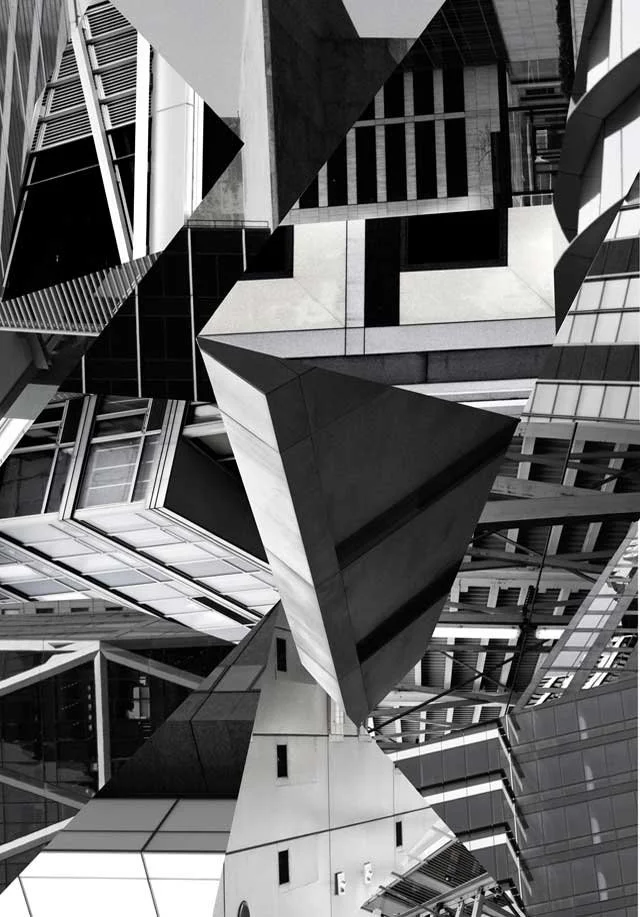
Concept: The idea came to me on a flight back to Providence, when a stop in NYC gave me one clear look at the whole city from above, a clarity I knew would disappear the moment I landed.
Process: I went back down to New York with a classmate to photograph it properly, then cut up and reassembled the photos into a large-scale static collage, each piece a cubist, layered mosaic of a different area of the city. But a static image never felt like enough for a city, all its moving parts, everything happening on any given block at once, so I animated the collage, breaking it apart into triangular shards that tumble and rotate in 3D space before settling into a new, denser composite.
Outcome: Where much of my thesis work had been an attempt to make sense of a subject that resists a single, tidy read, this piece was where it clicked, both for how I saw the city and for how the rest of the work fit together. It also ended up being the last piece I made, the one where people who had been watching me experiment without an obvious through-line could finally see what I'd been working toward.
02 / I Only See When I Move
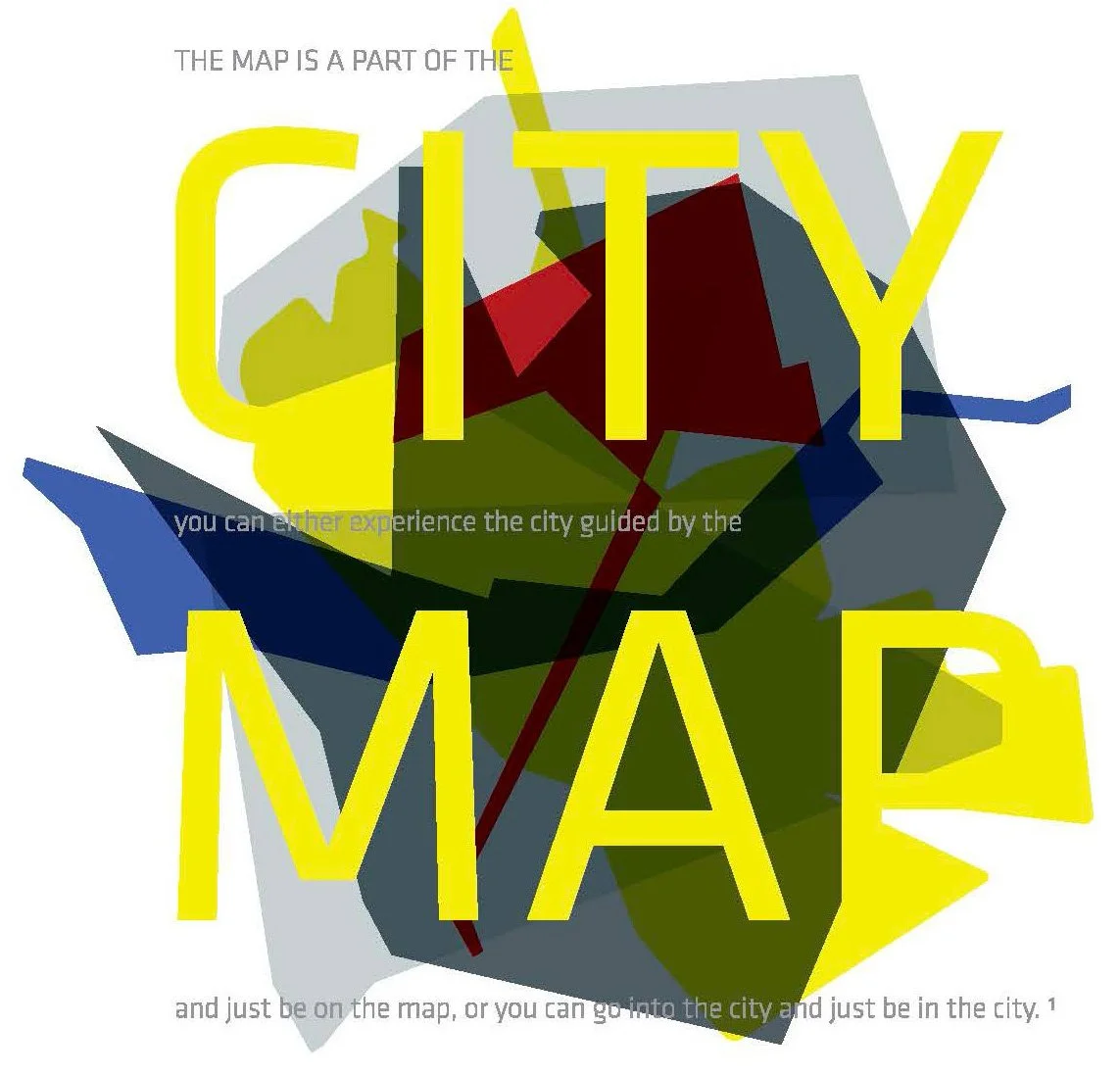
Concept: Providence's streets are famously erratic, a layout that predates modern city planning, narrow roads that suddenly change names, intersections that seem to defy logic. I wanted a way to map a city that resists being mapped.
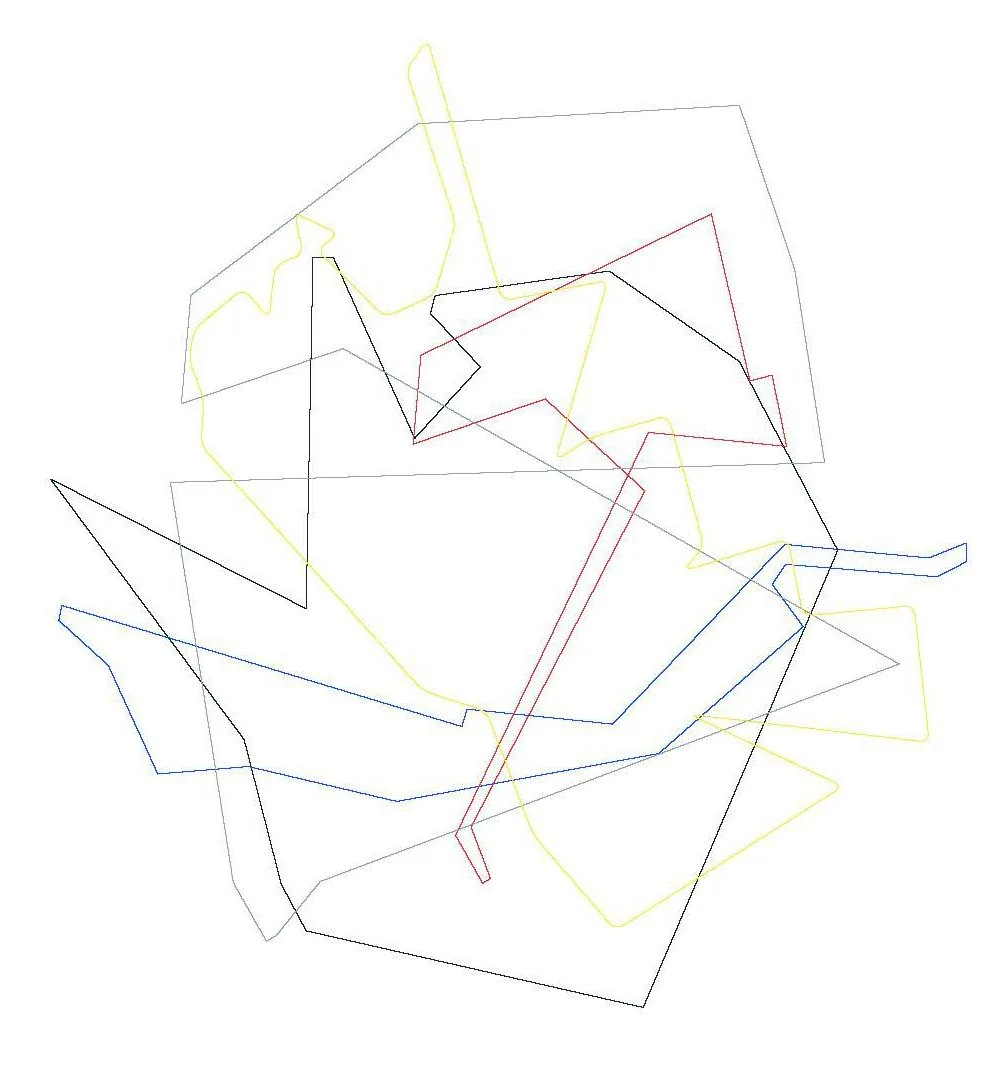
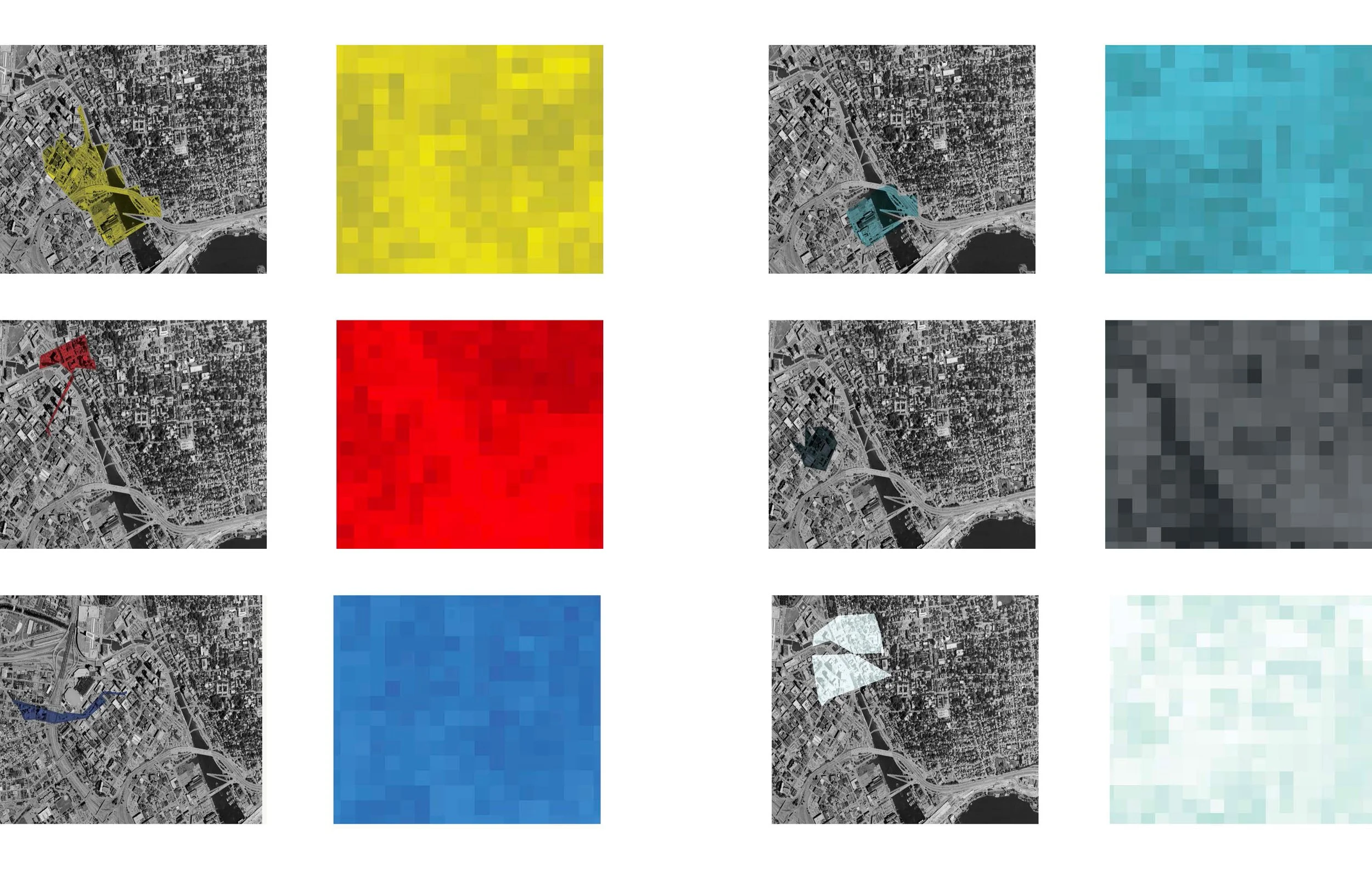
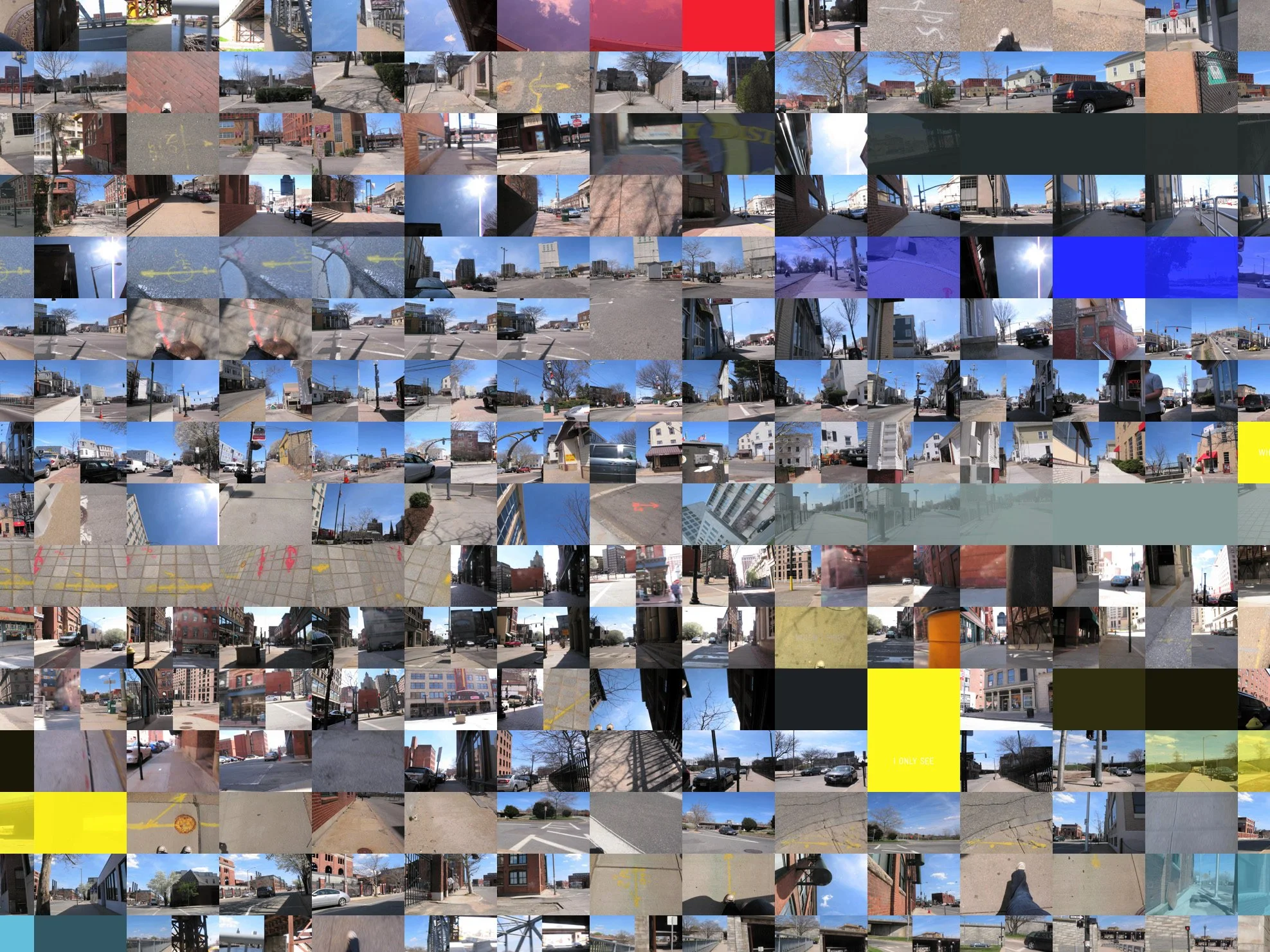
Process: I started by looking at how the city had already been mapped, digging into old Sanborn maps of Providence in the library's special collections. From there I strapped two cameras to myself, one front, one back, and walked with no destination, letting a GPS device track wherever I ended up. Every three seconds, both cameras fired automatically, capturing the city as I moved through it. Along the way I started following spray-painted arrows left behind by city utility workers.
Outcome: The resulting images were sorted by color and shape, then run through custom code to distill each walk into fields of shifting color, a low-tech, slightly absurd way of recording movement that became a way to map a city that resists being mapped.
03 / City in Search of Words
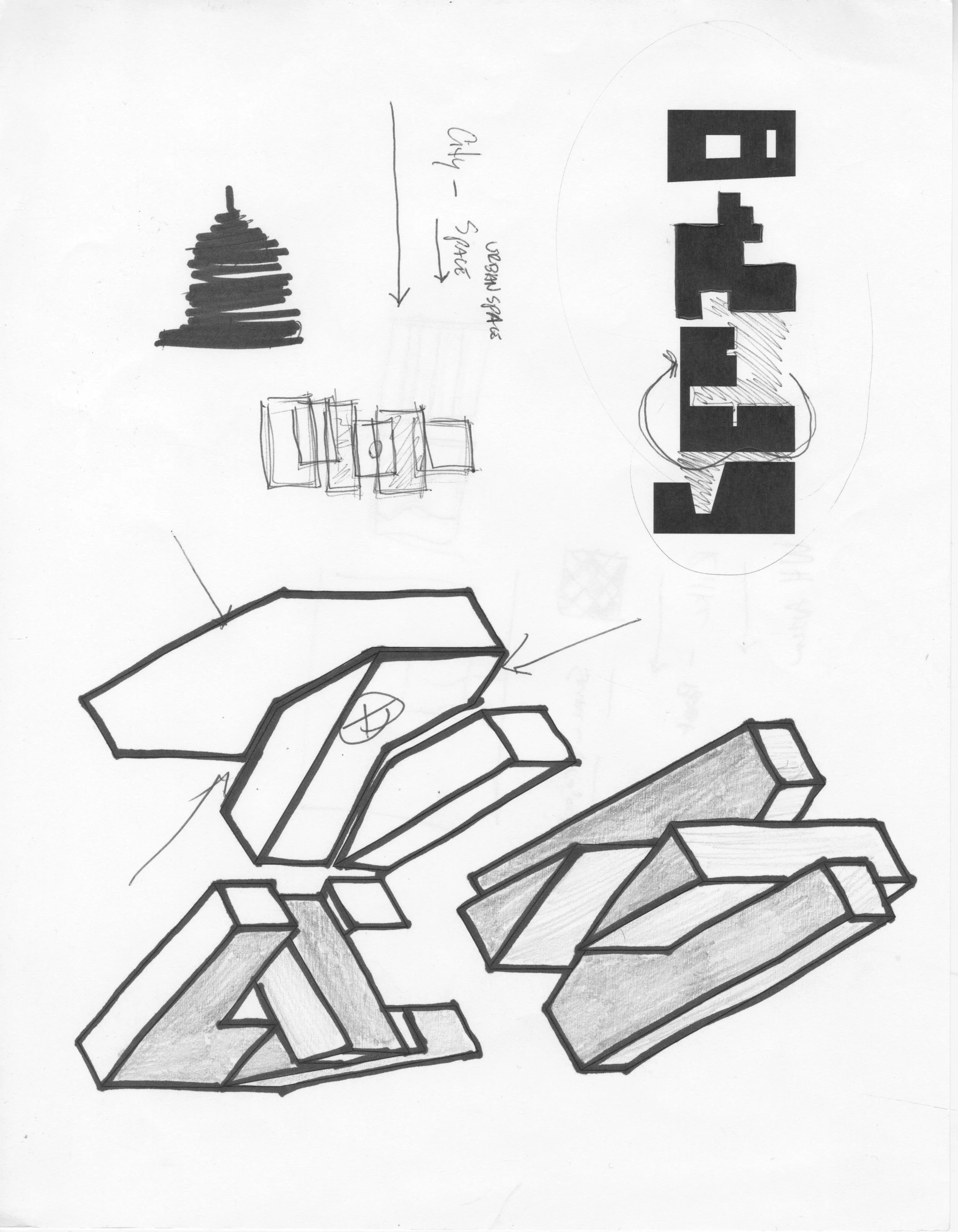
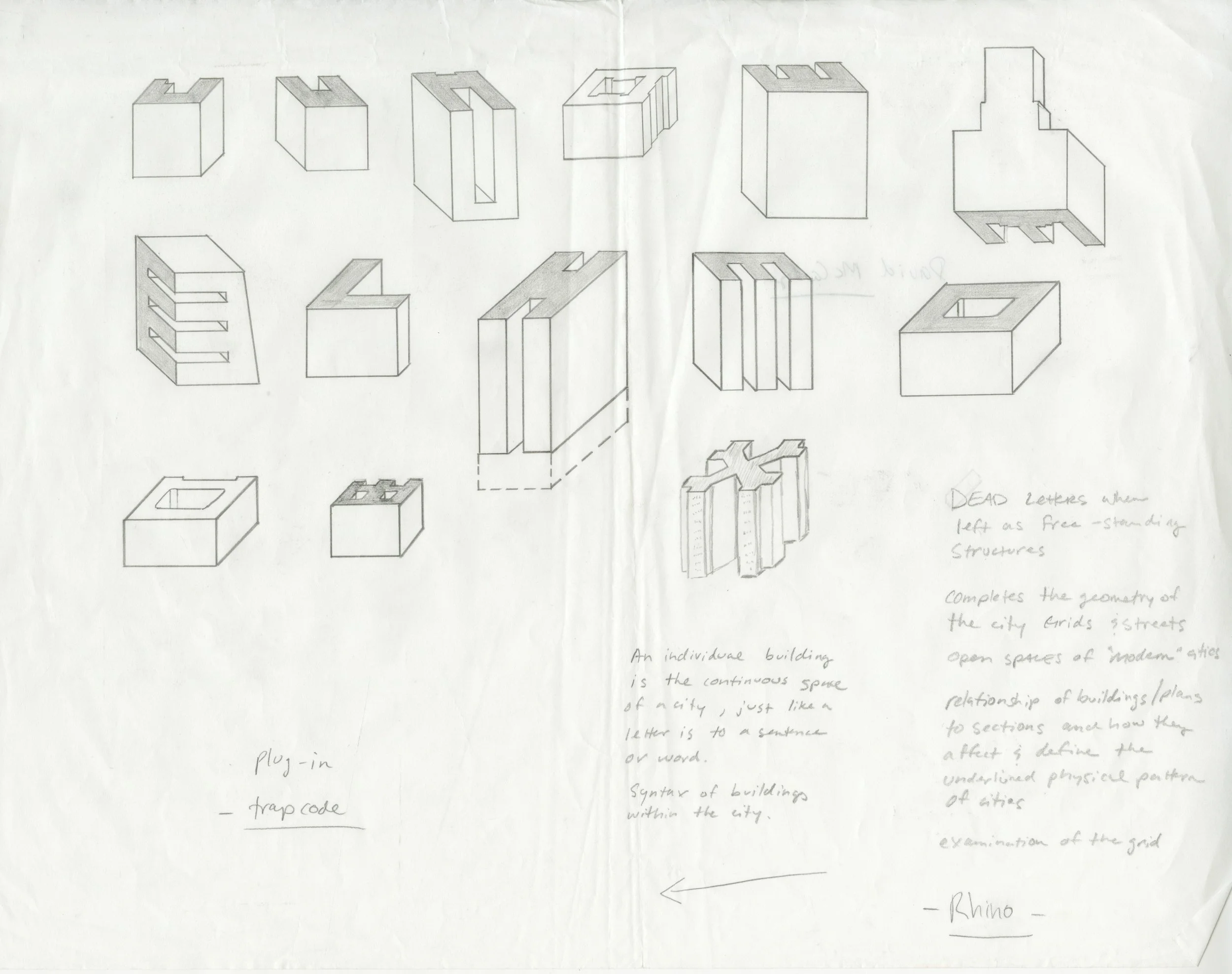
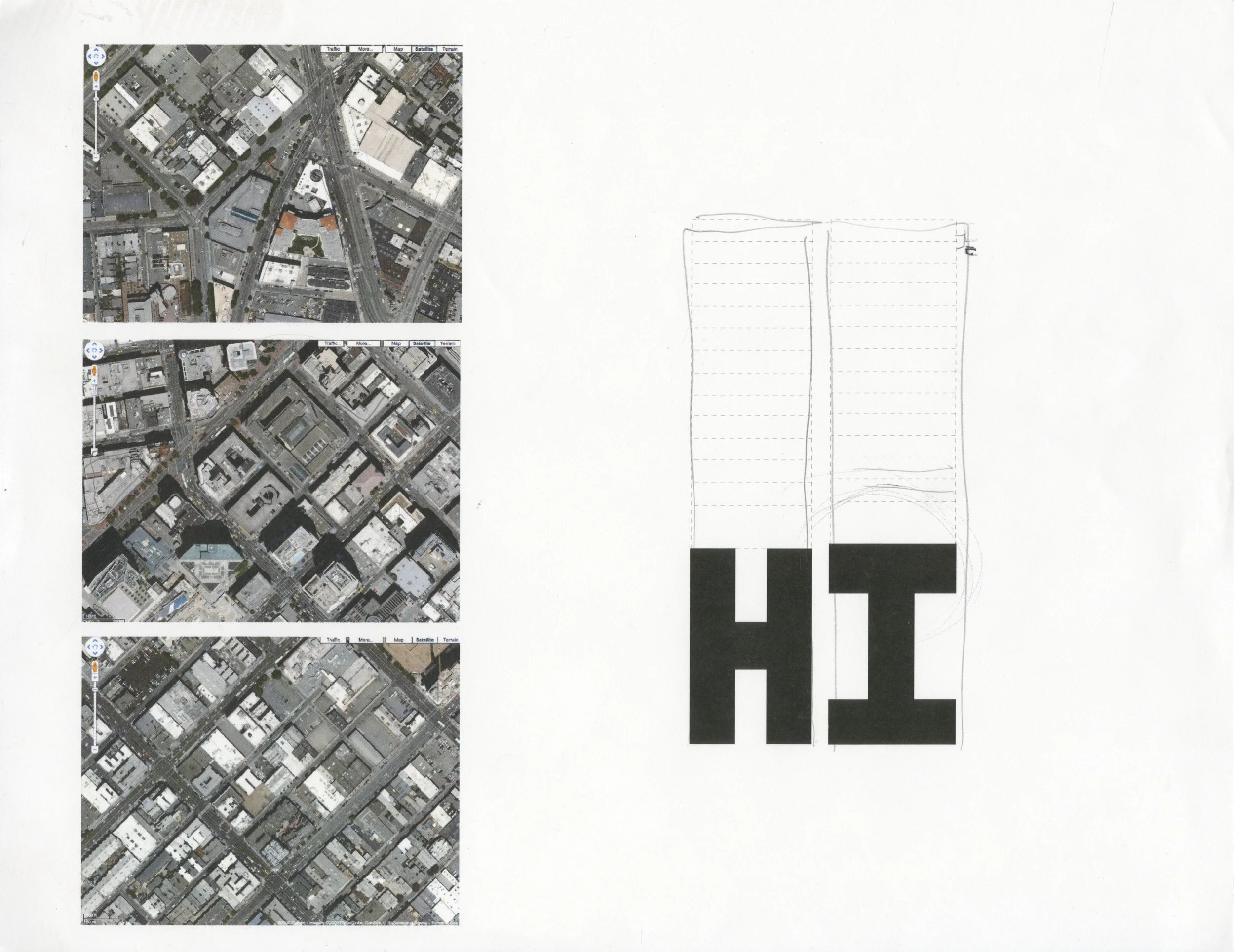
Concept: Drawing on Michel de Certeau's writing about the difference between experiencing a city at street level and seeing it whole from above, I surveyed San Francisco's grid-iron buildings from a bird's-eye view, in search of hidden language.
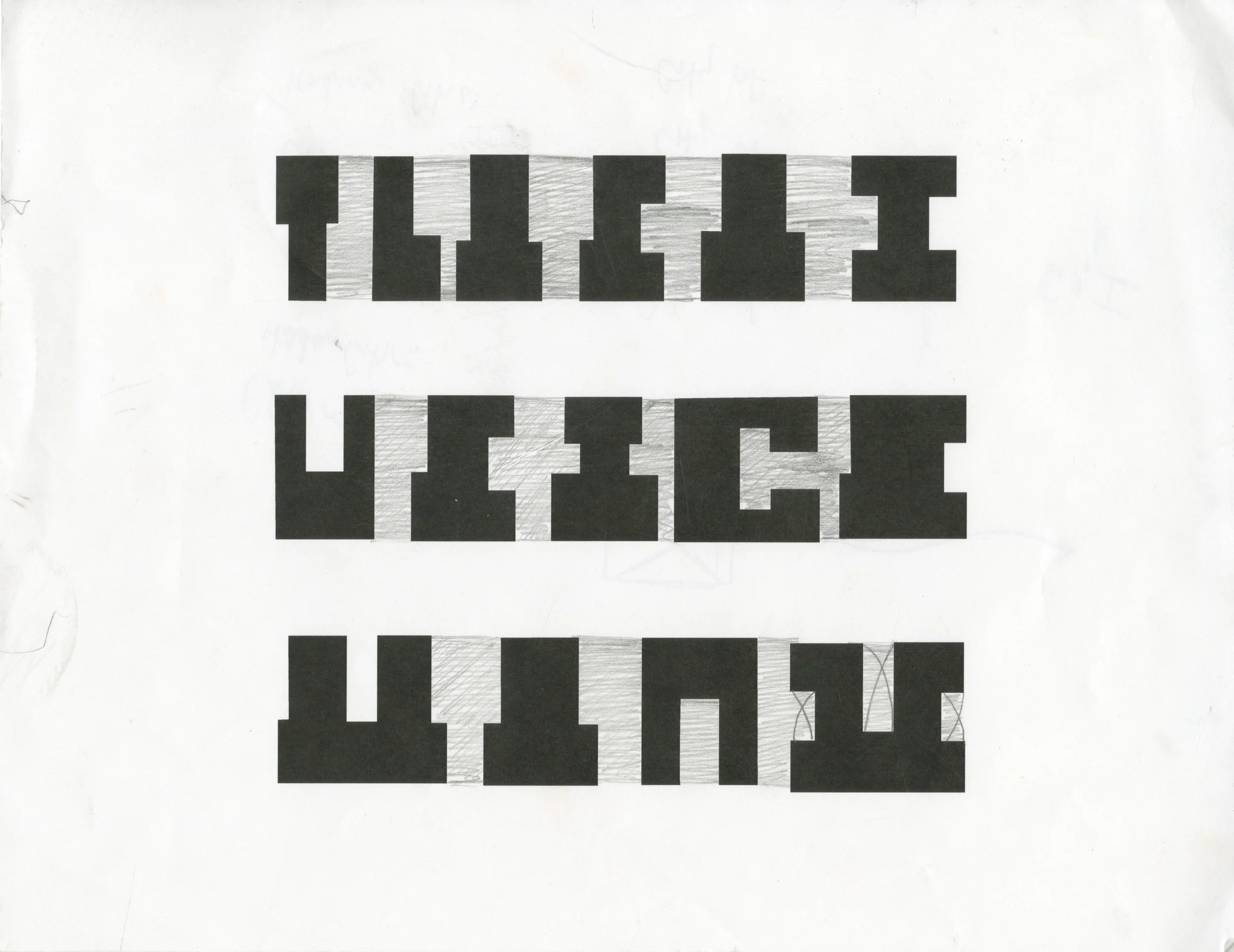
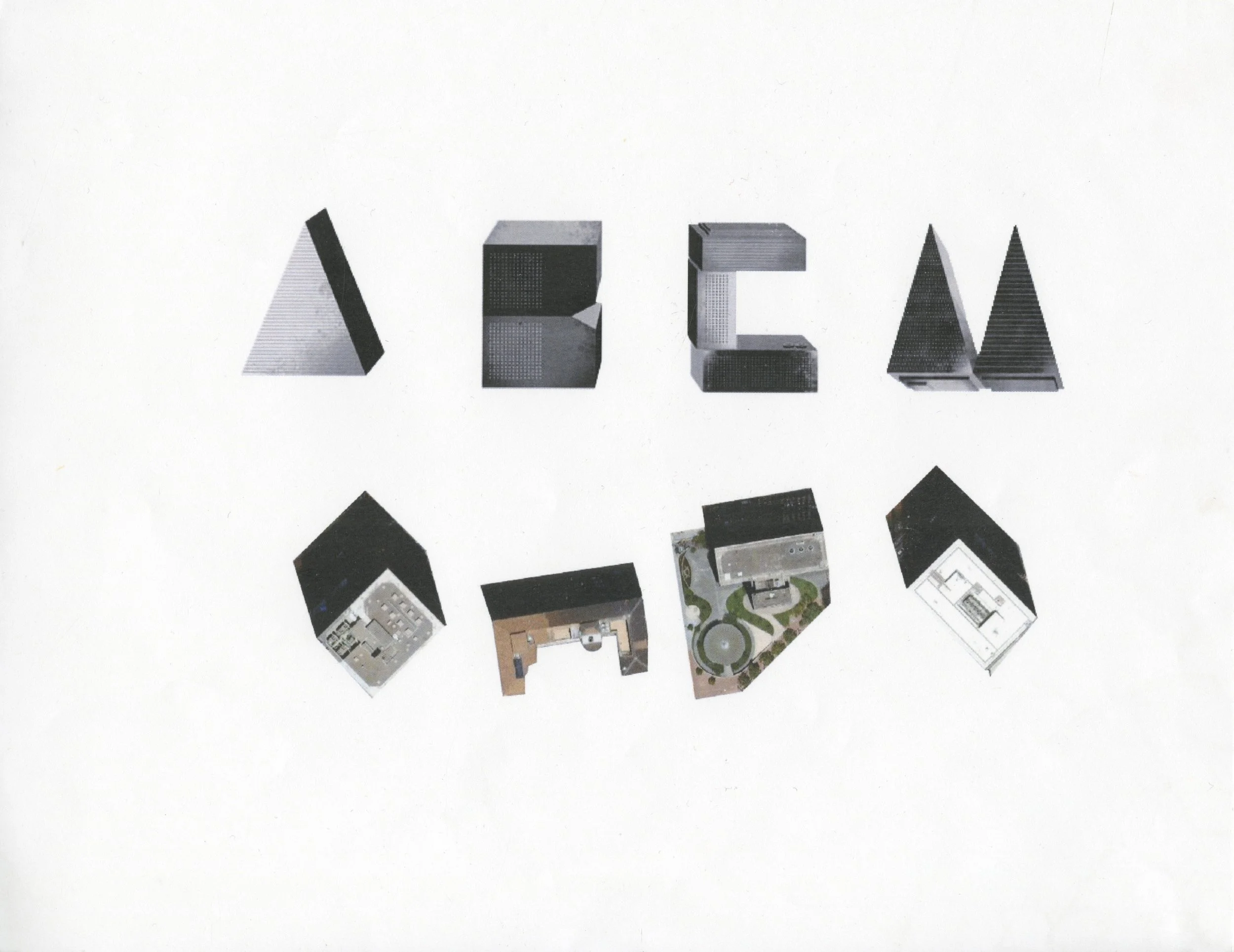
Process: I drew each building by hand, then a classmate who knew Maya modeled and animated them so they could be rotated and viewed from every angle, stripped of their surroundings until the isolated footprints started reading like letterforms.
Outcome: Rearranged, they spell out the piece's own joke: THIS SAYS NOTHING, an admission that my hope of finding something real spelled out in the architecture never quite panned out.
04 / Empty Lot
Concept: I walked past the Arcade building and what used to be the Providence Bank Building almost every day for the two years I lived in Providence. The empty space stayed static while movement surrounded it constantly.
Process/Outcome: I set out to activate it again with two projections. One put a digital clock, then the ticking hands of an analog clock, directly onto its skeletal facade. The other stretched footage from a train ride somewhere else entirely, not Providence, into a long panoramic band across the facade and onto the blank side wall next door, borrowing movement, and a sense of somewhere else, to fill a space that had none of its own.
05 / Pine Street Parking
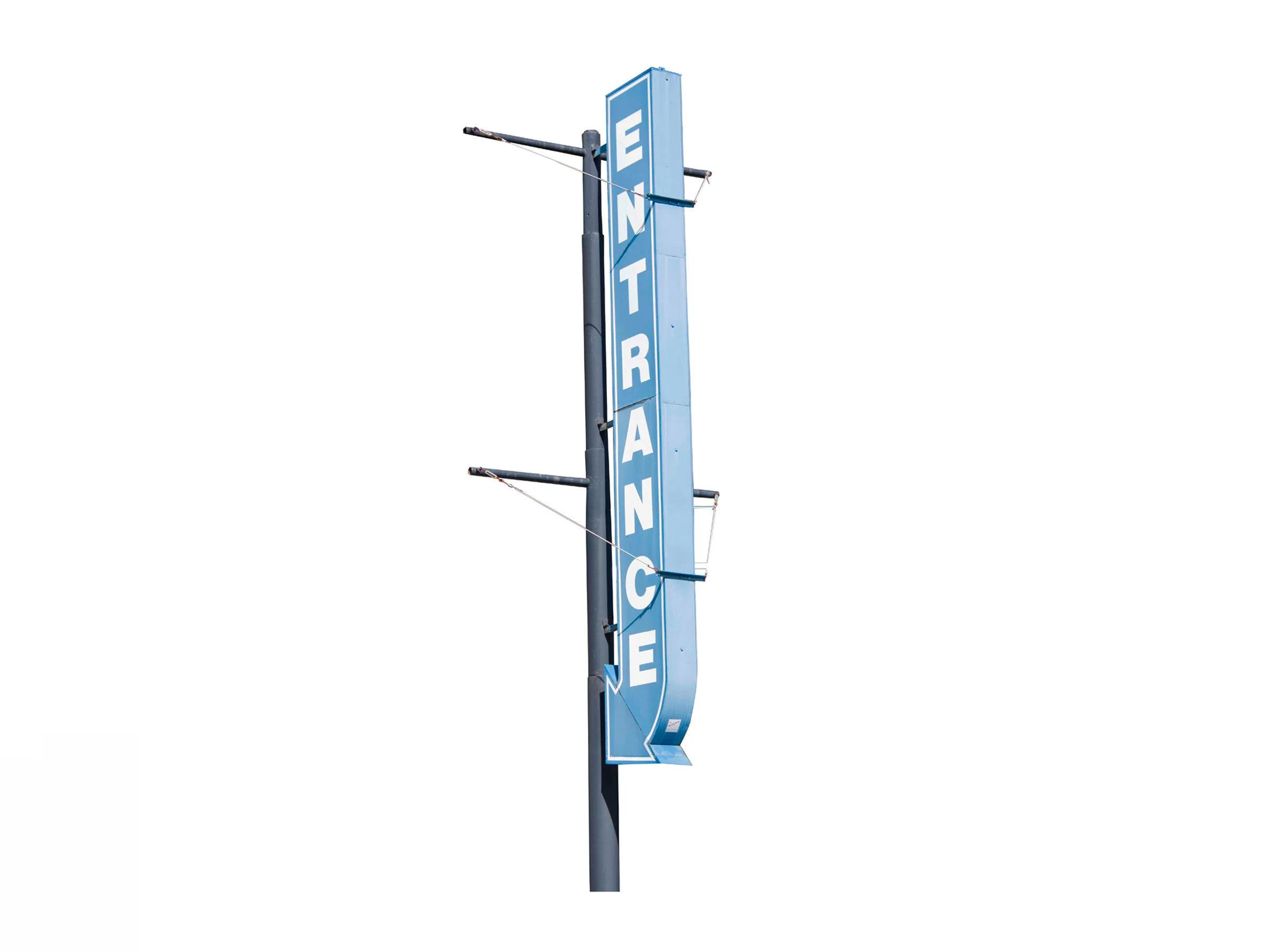
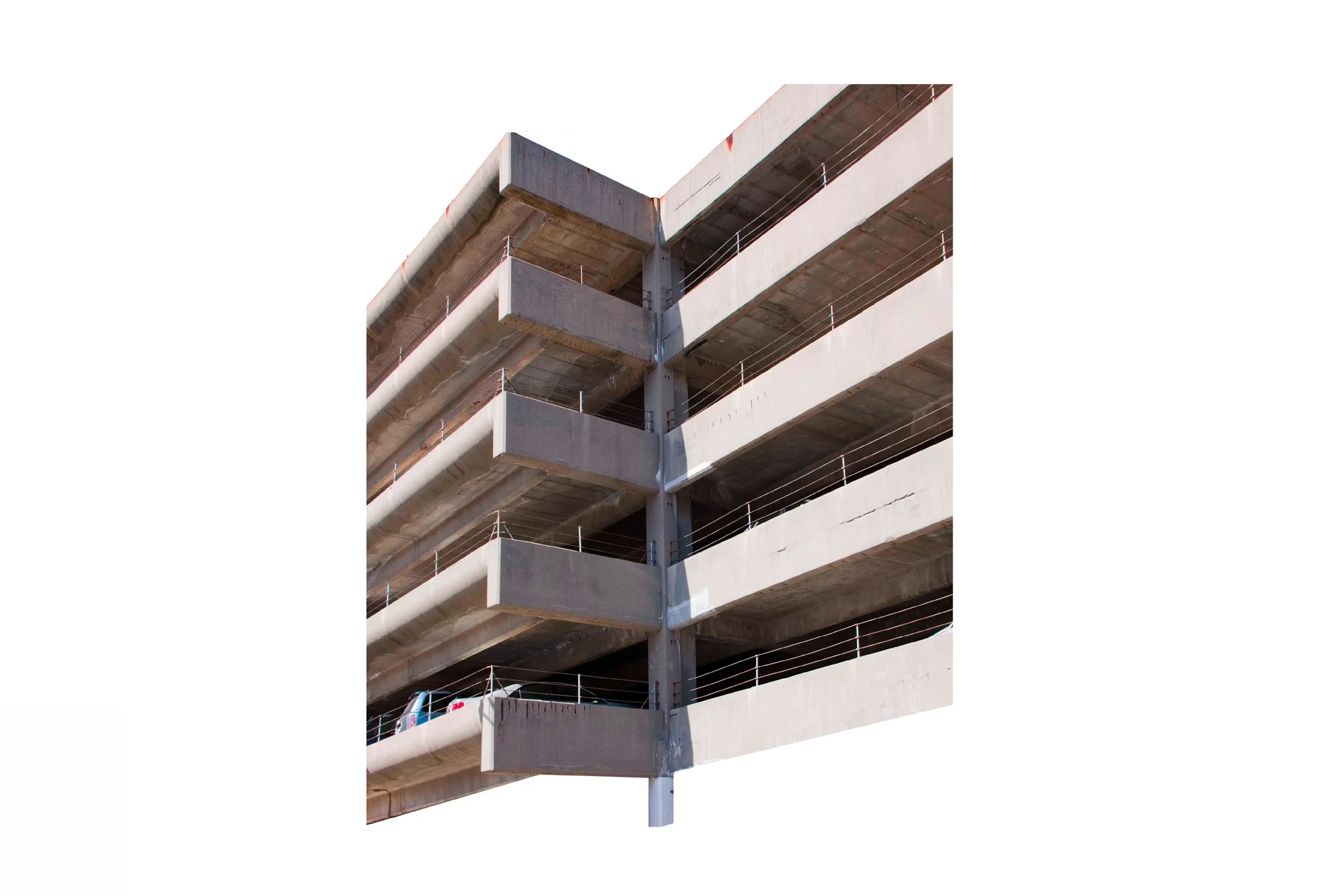
Concept: Parking garages are strange, overlooked spaces, open at all hours, filled with grit and echo, oil stains and tire marks, conspicuous in their own emptiness.
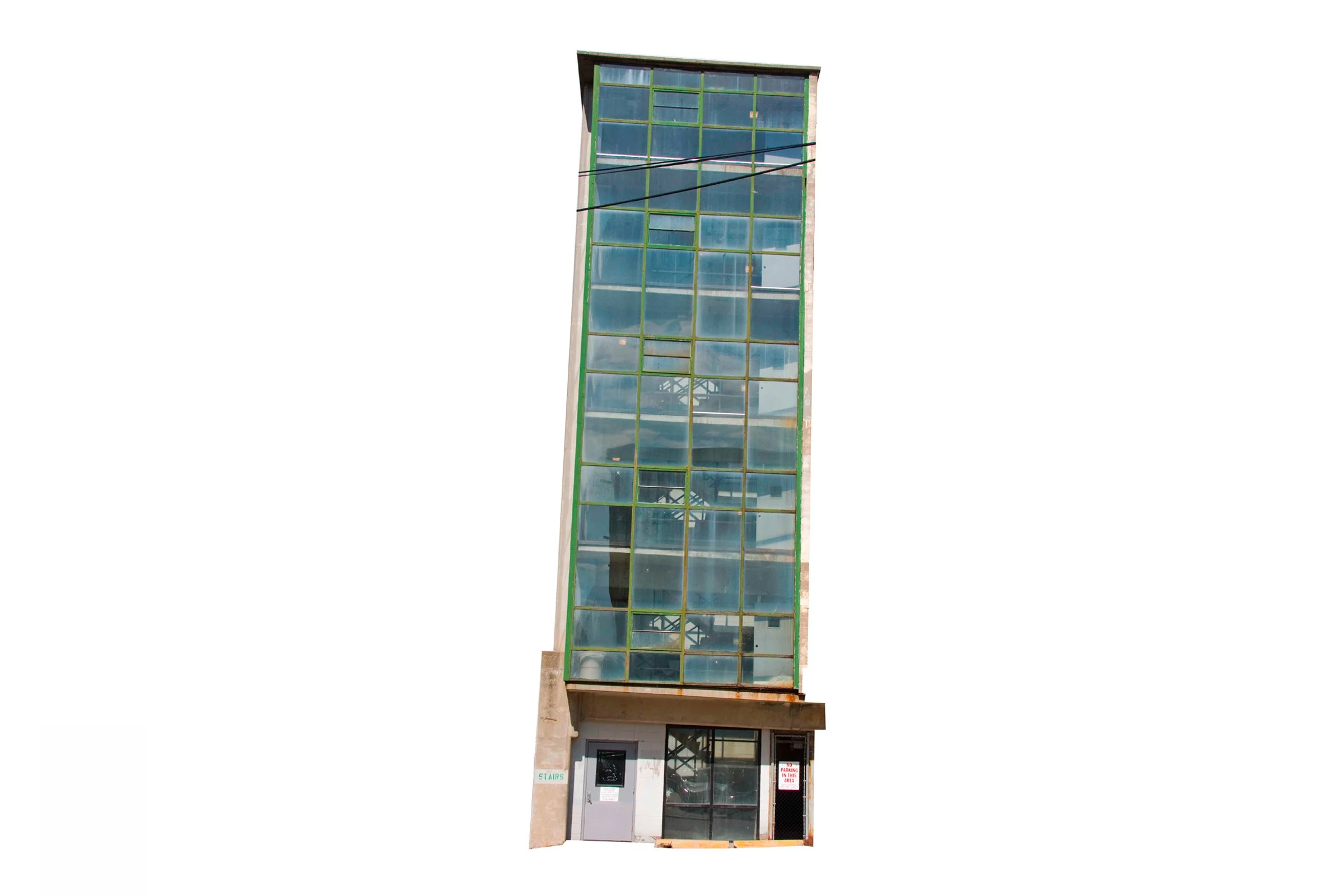
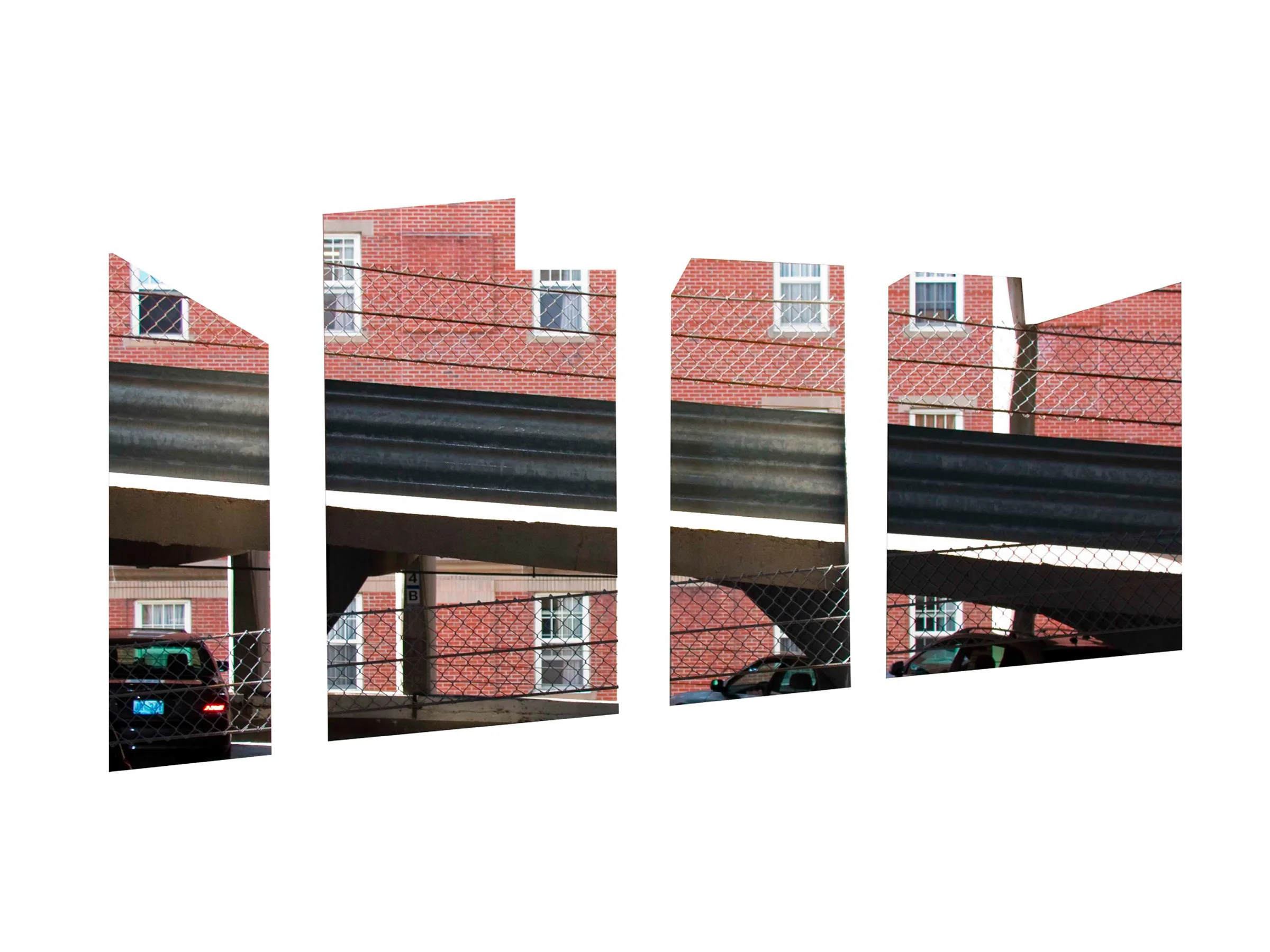
Process: I surveyed one garage on Pine Street, inside and out, photographing its signage, its concrete framing, the way its square, plumb facade gave way to an interior of inclines and declines. From those photos I traced the garage's own lines, its floor edges, mullions, and railings, then animated each image.
Outcome: Some resolved into thin, gridded patterns, others bold enough to read almost like a mark or logo, the building reduced again and again to its own structural rhythm.